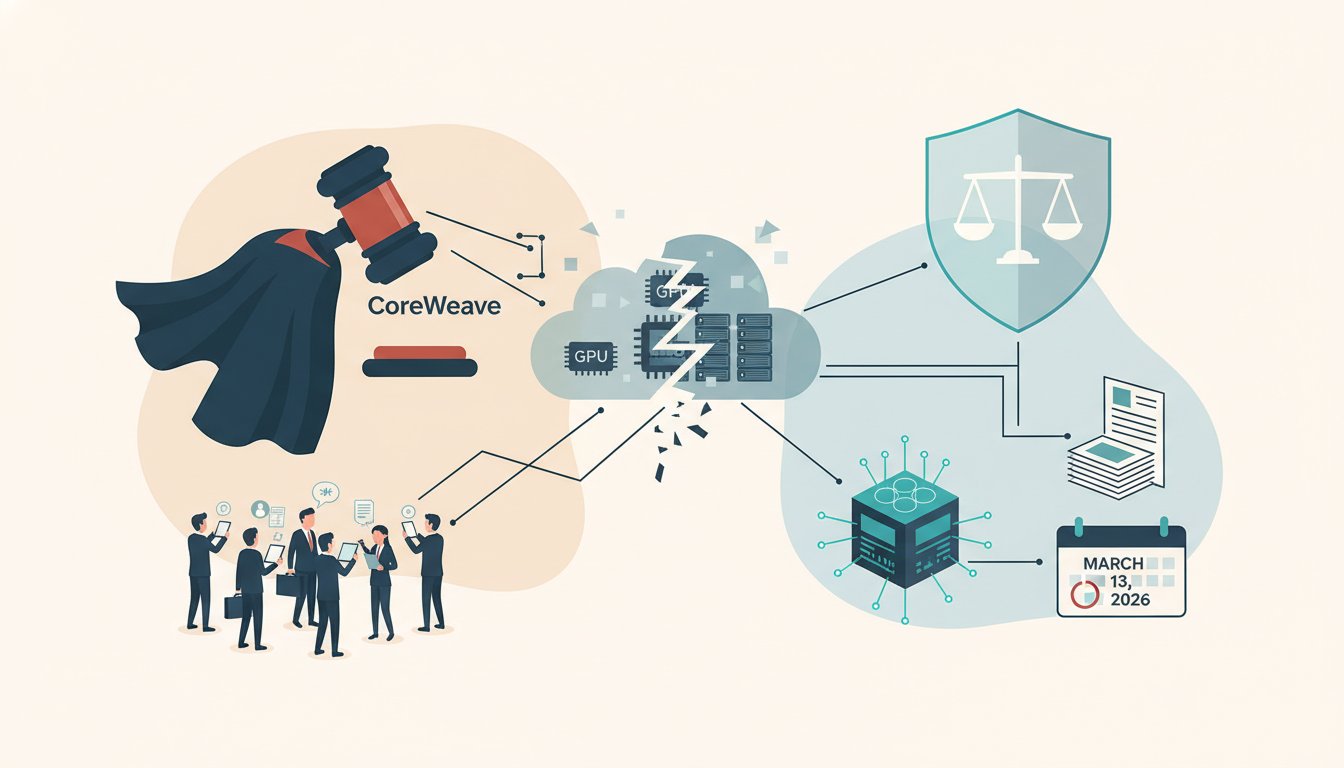
A securities class action lawsuit has been filed against CoreWeave, Inc. (NASDAQ: CRWV), a specialized provider of cloud and GPU infrastructure for artificial intelligence applications. The action, captioned Masaitis v. CoreWeave, Inc., No. 2:26-cv-00355, is currently pending in the United States District Court for the District of New Jersey. The lawsuit follows allegations that the company made material misrepresentations regarding its operational capabilities and the status of its data center developments.
Overview of Allegations and Legal Claims
The complaint asserts claims under Sections 10(b) and 20(a) of the Securities Exchange Act of 1934. According to the plaintiff’s counsel, Bleichmar Fonti & Auld LLP, the company allegedly misled investors regarding its ability to meet the high demand for AI infrastructure. Specifically, the suit alleges that CoreWeave failed to disclose significant construction delays at its data centers, which impacted its stated capacity to deliver GPU-intensive services.
For legal professionals managing such complex dockets, the use of AI litigation support can streamline the handling of technical evidence related to cloud computing and infrastructure hardware. The case highlights a growing trend of litigation targeting companies within the AI supply chain as growth expectations face the reality of physical infrastructure constraints.
Impact on the Legal Sector
This litigation presents several immediate challenges and considerations for attorneys, corporate counsel, and insurance providers. The complexities of GPU infrastructure and data center logistics mean that discovery will likely involve highly technical documentation. Efficient AI document review for litigators will be essential to identify relevant communications regarding construction delays and operational capacity across thousands of internal logs and vendor contracts.
Key areas of legal concern include:
- Heightened Disclosure Obligations: Public AI firms must now exercise extreme caution in how they represent "ready" capacity versus "planned" capacity to avoid similar fraud claims.
- eDiscovery Demands: The technical nature of the evidence, including server deployment records and power procurement agreements, will require sophisticated data management strategies.
- D&O Insurance Exposure: Allegations involving control person liability and the concealment of operational hurdles often trigger complex disputes over coverage and board-level fiduciary duties.
As the case progresses, firms may rely on a litigation strategy AI tool to predict procedural outcomes and manage lead plaintiff motions ahead of critical court dates. Furthermore, AI-powered legal analysis software can assist in scrutinizing the Section 10(b) and Section 20(a) claims filed under the Securities Exchange Act to determine if the alleged misstatements meet the threshold of materiality.
Lead Plaintiff Deadline
The court has set a deadline for investors who suffered financial losses to petition for appointment as lead plaintiff. The deadline for filing these motions is March 13, 2026. This period is critical for institutional investors and their counsel to evaluate their standing and potential recovery options within the class.
Conclusion
The securities class action against CoreWeave signals a new phase of litigation risk for the AI infrastructure sector. As the March 13, 2026, lead plaintiff deadline approaches, the legal industry will be monitoring how the U.S. District Court for the District of New Jersey handles disclosures related to AI hardware availability and data center operations. This case serves as a reminder for public AI companies to ensure that operational realities align closely with investor communications.